Easter Vector Seamless Patterns: A Practical Guide to Choosing the Right Digital Assets for Your Spring Projects
The transition from late winter to spring brings a surge in creative demand, particularly for designs that evoke renewal, celebration, and festivity. Among the most versatile assets available to designers, illustrators, and small business owners are Easter Vector Seamless Patterns. These digital assets offer a unique combination of scalability, editability, and aesthetic appeal, making them indispensable for everything from textile design to digital marketing materials. However, with a vast array of styles, formats, and quality levels available, selecting the right pattern set requires careful consideration of technical specifications and artistic intent.
This guide explores what defines high-quality Easter vector seamless patterns, how they compare to other design approaches, and the practical factors you should evaluate before downloading or purchasing these resources. Whether you are creating wrapping paper, designing greeting cards, or developing seasonal web graphics, understanding the nuances of vector-based repeating backgrounds will help you make informed decisions that align with your project’s specific needs.
Understanding the Core Characteristics of Easter Vector Seamless Patterns
At their foundation, Easter Vector Seamless Patterns are digitally created images built using mathematical paths rather than pixels. This distinction is critical because it allows the artwork to be scaled to any size without losing clarity or resolution. For a designer working on large-format printing, such as fabric for clothing or wallpaper, this capability is non-negotiable. Unlike raster images (JPG or PNG), which become pixelated when enlarged, vector files maintain crisp edges and smooth gradients at any scale.
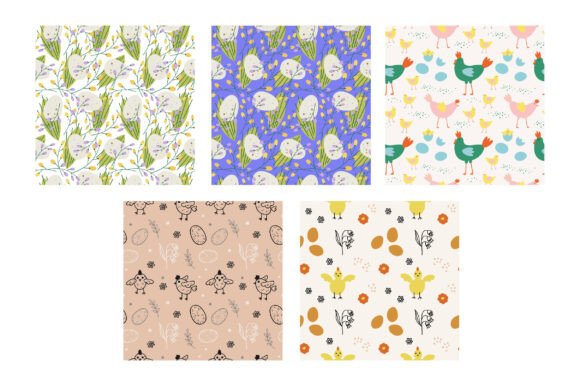
The "seamless" aspect refers to the tiling nature of the design. A well-constructed seamless pattern repeats perfectly in all directions, allowing it to cover infinite areas without visible seams or breaks. This is achieved through precise alignment of elements at the edges of the pattern tile. Common motifs in these collections include hand-drawn eggs, blooming flowers, fluffy chickens, and abstract modern ornaments. The term "hand-drawn" often implies a sketch-like, organic feel, which contrasts sharply with rigid, geometric corporate designs. This organic quality adds warmth and personality, making it ideal for festive occasions like Easter and spring celebrations.
When evaluating these assets, it is important to look beyond the visual preview. The true value lies in the underlying file structure. High-quality sets typically provide multiple file formats to accommodate different software environments and use cases. The inclusion of AI-10, EPS-10, JPG, and SVG formats ensures compatibility across a wide range of design tools, from Adobe Illustrator and CorelDRAW to web browsers and basic image editors.
File Format Compatibility and Workflow Efficiency
The availability of a comprehensive ZIP file containing all formats is a significant convenience factor. Here is how each format serves different stages of the design process:
- AI-10 and EPS-10: These are the primary source files for professional vector editing. They allow designers to modify colors, rearrange elements, and adjust scales within Adobe Illustrator or similar applications. Version 10 compatibility ensures that older versions of Adobe software can still open these files, which is useful for teams using legacy systems.
- SVG: Scalable Vector Graphics are essential for web design. SVG files are lightweight, code-friendly, and can be animated or styled directly with CSS. If your project involves a website banner or an interactive email newsletter, the SVG component is crucial.
- JPG: While not editable in the same way as vectors, JPGs provide a quick preview or a ready-to-use raster image for contexts where vector editing is unnecessary, such as simple social media posts or low-resolution print proofs.
Having all these formats bundled together saves time and reduces the need for external conversion tools, which can sometimes introduce artifacts or loss of quality. It streamlines the workflow from concept to final output.
Comparing Vector Patterns to Alternative Design Approaches
While Easter Vector Seamless Patterns are highly effective, they are not the only option for creating seasonal designs. Understanding how they compare to alternatives helps clarify when they are the best fit and when other methods might be more appropriate.
Vector vs. Raster Illustrations
Raster illustrations, composed of pixels, are often used for photorealistic effects or complex brush strokes that mimic traditional media. While raster images can be beautiful, they lack the infinite scalability of vectors. If you plan to use your design on both a business card and a billboard, a raster image will fail at the larger size. Vectors solve this problem entirely. However, raster images can sometimes achieve textures and gradients that are difficult to replicate purely with vector paths. For clean, graphic, and scalable designs—such as logos, icons, and repeating patterns—vectors remain the superior choice.
Seamless Patterns vs. Single Motifs
Some asset libraries offer single Easter motifs, such as an isolated egg or a chicken illustration, rather than full seamless patterns. Single motifs offer greater flexibility if you want to create your own custom layout or combine elements in a unique way. However, they require more effort from the designer to arrange them into a cohesive background. Pre-made Easter Vector Seamless Patterns provide an instant, balanced composition. For projects with tight deadlines or for designers who prefer a "plug-and-play" solution, seamless patterns are significantly more efficient. For those seeking total creative control over the arrangement, single motifs may be preferable.
Hand-Drawn Style vs. Geometric/Modern Ornaments
The prompt mentions "hand drawn festive repeating backgrounds" alongside "modern ornaments." These represent two distinct aesthetic directions. Hand-drawn styles evoke nostalgia, craftsmanship, and a personal touch, which resonates well with brands focusing on heritage, artisanal products, or family-oriented themes. Modern ornaments, characterized by clean lines, minimalism, and bold colors, suit contemporary brands, tech companies, or minimalist fashion lines. When choosing between these, consider your target audience. A boutique chocolate shop might benefit more from the warmth of hand-drawn chicks and flowers, while a tech startup’s Easter email campaign might lean toward sleek, abstract geometric eggs.
Evaluating Strengths, Tradeoffs, and Decision Factors
Selecting the right asset involves weighing several practical considerations. Below is an analysis of the strengths and potential limitations of using pre-made Easter Vector Seamless Patterns.
Strengths
- Cost-Effectiveness: Purchasing a bundle of vector patterns is generally far more affordable than commissioning a custom illustrator to create a unique seamless repeat from scratch.
- Professional Quality: Reputable vector packs are created by experienced designers, ensuring proper layer organization, color consistency, and correct tiling mechanics.
- Versatility: As noted, the multi-format support allows these assets to be used across print, web, and textile industries without additional conversion steps.
- Speed: Using a pre-made pattern drastically reduces production time, allowing designers to focus on layout and messaging rather than drawing every element.
Tradeoffs and Limitations
- Lack of Uniqueness: Since these patterns are sold to multiple users, there is a risk that your design may appear elsewhere. For major brands requiring exclusive intellectual property, this is a significant drawback. For small businesses or internal projects, this is rarely an issue.
- Customization Constraints: While vectors are editable, modifying a complex, tightly woven seamless pattern can be challenging. Rearranging elements might break the seamless tile, requiring advanced knowledge of vector software to fix.
- Color Matching: You may need to adjust the color palette to match your brand guidelines. While easy in vector software, it adds a step to the workflow.
Best-Fit Situations for Easter Vector Seamless Patterns
To determine if Easter Vector Seamless Patterns are the right choice for your current project, consider the following scenarios:
- Textile and Fabric Design: If you are designing Easter-themed apparel, scarves, or home decor, the scalability and seamless tiling of vector patterns are essential. The AI/EPS files can be sent directly to printers who require vector inputs.
- Packaging and Wrapping Paper: For product packaging, especially for confectionery or gift boxes, a seamless pattern provides a continuous, immersive background. The ability to scale ensures the pattern looks good on both small candy wrappers and large gift bags.
- Digital Marketing and Social Media: The inclusion of SVG and JPG formats makes these patterns ideal for creating consistent branding across Instagram stories, Facebook banners, and email headers. The "hand-drawn" aesthetic adds a friendly, approachable tone to digital communications.
- Greeting Cards and Stationery: The intricate details of hand-drawn flowers and eggs translate well to printed stationery. High-resolution exports ensure that fine lines remain sharp on paper.
Conversely, if you are creating a logo that needs to be recognizable at very small sizes, a complex seamless pattern might be too busy. In such cases, a simplified, single-motif vector icon would be more effective. Similarly, if your project requires photorealistic imagery, vector patterns will not meet that aesthetic goal.
Practical Tips for Implementation
Once you have selected your Easter Vector Seamless Patterns, follow these best practices to ensure optimal results:
Check Color Modes: Ensure that your vector files are converted to CMYK for print projects and RGB for digital displays. Many vector bundles default to RGB, so manual adjustment is necessary to prevent color shifts during printing.
Test the Tile: Before committing to a large print run or final design, duplicate the pattern tile and place it next to itself horizontally and vertically. Check for any visible gaps or misalignments at the seams. A high-quality pack will have perfect alignment, but verifying this step catches any potential errors early.
Layer Organization: When opening the AI or EPS files, explore the layers. Well-organized files will have separate layers for different elements (e.g., one layer for eggs, another for flowers). This allows you to isolate and recolor specific parts of the pattern without affecting the entire design.
Consider Licensing: Always review the license agreement associated with the download. Most vector packs allow for commercial use in end products (like selling shirts with the pattern), but some may restrict resale of the digital file itself or limit the number of prints. Understanding these terms protects you from legal issues down the line.
Conclusion
Easter Vector Seamless Patterns represent a powerful resource for designers looking to capitalize on the spring season with professional, scalable, and aesthetically pleasing graphics. By offering a mix of hand-drawn charm and modern ornamentation, along with comprehensive file format support, these assets bridge the gap between artistic expression and technical utility. While they may not replace the need for custom illustrations in every scenario, they offer an efficient, cost-effective, and high-quality solution for a wide range of applications. By carefully evaluating your project’s requirements regarding uniqueness, scalability, and style, you can leverage these patterns to create impactful Easter and spring designs that resonate with your audience.