Abstract Wavy Patterns in Warm Seamless: A Guide to Smart Digital Asset Selection
When you are looking for a digital asset to elevate your design projects, the distinction between a generic background and a professional-grade pattern can be subtle but impactful. Abstract Wavy Patterns in Warm Seamless offers a specific aesthetic that combines organic movement with high-contrast warmth. However, navigating the digital marketplace for textures and patterns requires more than just clicking "buy." It involves understanding resolution, format compatibility, color accuracy, and licensing nuances. This guide aims to help creators, marketers, and business owners make informed decisions when incorporating this vibrant abstract pattern into their workflows.
Understanding the Visual Impact of Warm Abstract Waves
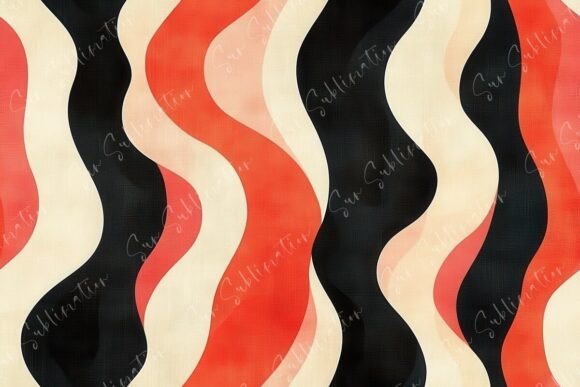
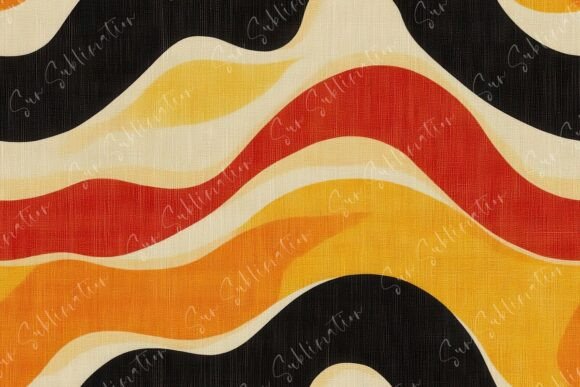
The visual language of wavy lines suggests fluidity, motion, and energy. When these lines are rendered in warm colors—think fiery reds, glowing oranges, and rich yellows—against a stark black backdrop, the result is a high-energy composition that demands attention. This contrast creates depth and drama, making it an excellent choice for backgrounds where text needs to remain legible or where the design itself serves as a focal point.
For entrepreneurs and bloggers, such patterns can break up monotony in blog posts, social media graphics, or email newsletters. For educators, they can add visual interest to presentation slides without distracting from the core content. The key lies in using the pattern strategically. Because the pattern is seamless, it can be tiled infinitely, allowing for full-page coverage on websites or large-format prints without visible seams. This versatility is what makes it appealing across various mediums, from web headers to printed merchandise.
Why Resolution and Format Matter More Than You Think
One of the most common mistakes buyers make is focusing solely on the visual preview while ignoring technical specifications. The product description specifies a size of 4500 x 3000 pixels at 300 dpi. While this sounds impressive, it is crucial to understand what this means for your specific use case.
A resolution of 300 dpi (dots per inch) is the industry standard for high-quality printing. If you intend to print this pattern on brochures, flyers, or even large banners, this resolution ensures that the wavy lines remain crisp and do not appear pixelated or blurry. However, if you are only using this image for low-resolution web displays, such as small thumbnails or mobile app icons, this file size might be overkill, leading to slower load times without a noticeable visual benefit.
Furthermore, the file is provided in JPEG format. JPEG is a lossy compression format, which means some data is discarded to reduce file size. For complex gradients and sharp contrasts like those in this abstract pattern, JPEG is generally acceptable. However, if you plan to edit the colors extensively or overlay multiple layers in software like Photoshop, a TIFF or PSD file would offer better quality retention. Be aware that JPEGs do not support transparency. If you need the wavy pattern to blend seamlessly behind other elements without a solid black box, this format may limit your creative options unless you manually remove the background, which can introduce artifacts along the edges.
Navigating the Digital Download Experience
Purchasing digital assets has streamlined the creative process, but it also introduces new pitfalls regarding delivery and accessibility. The product is delivered as an immediate download in a zipped file. While this is convenient, it is essential to have the right tools to manage these files.
- Extraction Issues: Ensure your computer or device has built-in or third-party software capable of unzipping files. Failure to extract the archive correctly can result in corrupted files that cannot be opened.
- Storage Management: High-resolution images consume significant storage space. Before purchasing, verify that you have adequate hard drive or cloud storage available. A single 300 dpi JPEG of this size can be several megabytes, and storing multiple variations quickly adds up.
- Organization: Once downloaded, move the file immediately to a dedicated project folder. Relying on the default "Downloads" folder often leads to lost assets, especially if you are managing multiple design projects simultaneously.
The Color Accuracy Challenge
Perhaps the most critical aspect to consider when buying digital art is the discrepancy between screen display and physical output. The seller explicitly notes that colors viewed on screen will vary from actual printed products. This is not a flaw in the product but a fundamental limitation of digital technology.
Every monitor, phone, and tablet uses different backlighting technologies and color profiles. An RGB (Red, Green, Blue) color model used by screens emits light, whereas CMYK (Cyan, Magenta, Yellow, Key/Black) used by printers reflects ink. Warm colors, particularly bright oranges and reds, can look significantly duller or shifted in hue when printed. A vibrant orange on your screen might print as a muted terracotta.
To avoid disappointment, take the following steps:
- Soft Proofing: If you are designing for print, use design software to simulate how the colors might look in CMYK mode before finalizing your layout.
- Print Samples: For critical projects, order a small test print. This allows you to assess the true color fidelity and adjust your design accordingly.
- Adjust Expectations: Understand that digital previews are approximations. Use them for compositional reference rather than exact color matching.
Evaluating Suitability for Your Project
Before adding Abstract Wavy Patterns in Warm Seamless to your cart, pause and evaluate its fit within your broader design strategy. Ask yourself the following questions:
- Is the contrast appropriate? The black background provides high contrast, which is great for readability but may feel too heavy for minimalist designs. Consider whether the dark tones align with your brand’s aesthetic.
- Does the scale work? At 4500 x 3000 pixels, the pattern contains a certain density of waves. When scaled down for small elements, the waves may become indistinct blobs. When scaled up for large formats, ensure the wave frequency doesn’t cause visual vibration or eye strain.
- What is the intended medium? As mentioned, this file is optimized for both high-res print and digital use. However, if your primary use is video production, check the frame rate and resolution requirements of your editing software to ensure smooth integration.
Final Recommendations for a Smooth Purchase
Purchasing digital assets should be a seamless experience that enhances your productivity, not hinders it. By paying attention to technical details like resolution and format, understanding the limitations of color reproduction, and organizing your files properly, you can maximize the value of your investment.
This abstract pattern is a versatile tool for any creator willing to use it thoughtfully. Whether you are a freelancer crafting a client proposal, a blogger seeking unique featured images, or a small business owner designing packaging, this pattern can add a layer of sophistication and energy. Just remember to verify your system capabilities, prepare for color variations, and keep your digital library organized. With these precautions in mind, you can confidently integrate this vibrant design element into your work, ensuring professional results every time.