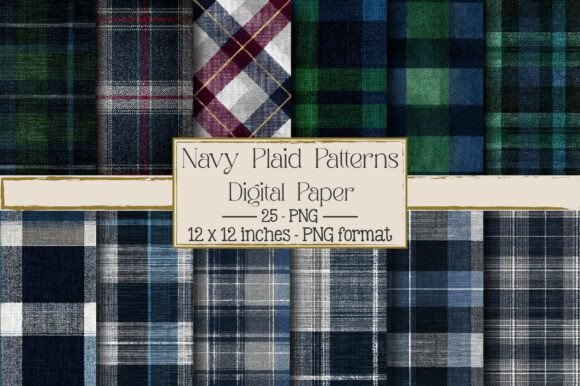
Navy Plaid Patterns for Creative Projects
Design is often about finding the right balance between structure and texture. In a digital landscape saturated with flat, minimalist aesthetics, there remains a strong appetite for patterns that evoke tradition, craftsmanship, and depth. Navy Plaid Patterns offer precisely this kind of visual weight. They are not merely background elements; they are foundational textures that can anchor a design, provide context, or add a layer of sophisticated detail to otherwise simple compositions.
For professionals ranging from small business owners to independent artists, having access to high-quality, versatile pattern assets is crucial. The specific collection referenced here—featuring 25 distinct designs with a solid color distressed effect—addresses a common pain point in digital creation: the need for authentic-looking textures without the time-consuming process of creating them from scratch. By understanding how these patterns function and where they apply best, creators can significantly enhance the perceived value of their physical and digital products.
The Value of Distressed Textures in Modern Design
Why choose a distressed navy plaid over a crisp, clean vector grid? The answer lies in the psychology of materiality. A distressed effect mimics the wear and tear of real-world fabrics. It suggests history, durability, and authenticity. When you incorporate Navy Plaid Patterns into your work, you are borrowing the tactile qualities of heavy cotton or wool, even if the final output is purely digital or printed on smooth paper.
This "solid color distressed" approach is particularly effective because it avoids the clutter of multi-colored plaids while retaining the structural recognition of the tartan form. The navy base provides a neutral, professional tone that pairs well with almost any accent color, while the distressing adds character. This makes the patterns incredibly versatile. They do not scream for attention but rather support the primary content of your design, allowing logos, typography, or product photography to take center stage.
Practical Applications for Physical Products
The most immediate benefit of these assets is their readiness for print-on-demand (POD) and physical merchandise production. With a resolution of 300 dpi at 12×12 inches, these PNG files meet the standard requirements for high-quality printing. This technical specification ensures that when you scale the image down for a sticker or up for a wall decor piece, the edges remain sharp and the texture details do not pixelate.
- Apparel and Accessories: For entrepreneurs selling t-shirts, tote bags, or scarves, a navy plaid background can instantly elevate a basic garment. The distressed look works exceptionally well on denim or canvas materials, creating a cohesive aesthetic that appeals to consumers looking for vintage-inspired or rugged styles.
- Paper Goods and Stationery: Bloggers and educators often create printable planners, journals, or greeting cards. Using these patterns as backgrounds for cover pages or interior dividers adds a professional polish. The transparent background feature allows designers to overlay text or other graphics seamlessly, ensuring the pattern does not interfere with readability.
- Home Decor and Wall Art: In the realm of scrapbooking and frame artwork, texture is key. A large-scale print of one of these 25 designs can serve as a striking abstract piece. The navy hue brings a sense of calm and stability, making it suitable for modern rustic or industrial interior design themes.
Workflow Efficiency for Digital Creators
Time is a finite resource for freelancers and marketers. Sourcing, licensing, and adjusting custom textures can consume hours of productive time. Having a curated pack of 25 variations solves this bottleneck. Instead of searching for individual assets that may vary in style or quality, you have a cohesive set that guarantees visual harmony across a project.
The transparency of the PNG format is a significant functional advantage. Unlike JPEGs, which come with a solid white or colored background, transparent PNGs allow for non-destructive editing. You can place the navy plaid pattern behind a logo, blend it with other layers using opacity settings, or mask specific areas to reveal underlying colors. This flexibility supports complex design workflows where precision is required.
Furthermore, the ease of resizing means you are not locked into a single dimension. Whether you are designing a social media post that requires a small square crop or a banner ad that needs a wide aspect ratio, the 12×12 inch source file provides enough data to maintain quality. This reduces the need for multiple downloads or conversions, streamlining the path from concept to final export.
Who Benefits Most from These Assets?
While the utility of these patterns is broad, certain groups will find them particularly impactful.
Small Business Owners and E-commerce Sellers benefit from the ability to quickly prototype product mockups. If you sell digital templates or physical goods, having ready-made textured backgrounds allows you to showcase your products in realistic contexts. For example, displaying a notebook on a navy plaid surface looks more intentional and appealing than a plain white void.
Content Creators and Marketers use these patterns to maintain brand consistency. If a brand’s color palette includes navy blue, incorporating a subtle plaid texture into email headers, presentation slides, or website banners can reinforce brand identity without overwhelming the user. The distressed element adds a human touch, countering the sterility often associated with corporate communications.
Hobbyists and Crafters who engage in digital scrapbooking or card making appreciate the artistic variety. Twenty-five designs provide ample opportunity for experimentation. One might use a tighter weave pattern for a structured layout and a looser, more faded version for a romantic or nostalgic theme. This variety encourages creativity and helps users develop a unique visual voice.
Considerations for Implementation
To get the best results, it is important to consider how these patterns interact with other design elements. Because the navy plaid has visual weight, it should be used judiciously. Overlapping too many busy elements can lead to visual clutter. It is often effective to pair the pattern with ample negative space or solid blocks of color to let the eye rest.
Additionally, users should be aware of the limitations inherent in digital-to-physical transitions. As noted in the product details, colors may vary depending on devices and printers. Screen calibration differs from person to person, and printer ink densities vary by brand. Therefore, it is always advisable to order a test print before committing to a large batch of physical products. This step ensures that the navy shade matches your expectations and that the distressed effect prints clearly.
Maximizing Creativity with Instant Access
The instant download nature of this asset pack aligns with the fast-paced needs of modern creators. There is no waiting for shipping or dealing with inventory management. Once downloaded, the files are yours to use within the scope of the license. This immediacy allows for spontaneous creativity. If an idea strikes during a brainstorming session, you can immediately pull a relevant pattern from the pack and start building.
Ultimately, the value of Navy Plaid Patterns lies in their ability to bridge the gap between traditional aesthetics and modern digital tools. They provide a shortcut to sophistication, allowing creators to produce work that looks professionally textured and thoughtfully designed. Whether you are enhancing a personal hobby project or scaling up a commercial product line, these 25 designs offer a reliable, high-resolution foundation for your next creative endeavor.
By integrating these patterns into your workflow, you are not just adding a background; you are adding depth, context, and a touch of timeless style. For those looking to improve the presentation of their work, save time on asset sourcing, and solve the problem of generic-looking designs, this collection offers a practical and effective solution.